Google+ Georgia On My Mind

Monday, June 24, 2013

Changing Pictures

In 1900, W.E.B. Du Bois - then a professor of sociology at Atlanta University - now known as Clark Atlanta University - compiled a series of 363 photographs in two albums titled Types of American Negroes and Negro Life in Georgia, USA which he put on display at the Paris Exhibition.

The exhibit also contained items including charts, maps, and graphs recording the growth of population, economic power and literacy among African Americans in Georgia - the Black middle class that existed some thirty-five years after slavery was outlawed via the 13th Amendment.

Today the Library of Congress site that houses the collection advises:

[Du Bois was] committed to combating racism with empirical evidence of the economic, social and cultural conditions of African Americans. He believed that a clear revelation of the facts of African American life and culture would challenge the claims of biological race scientists influential at the time, which proposed that African American men and women challenged the scientific "evidence" and popular racist caricatures of the day that ridiculed and sought to diminish African American social and economic success. Further, the wide range of hair styles and skin tones represented in the photographs demonstrated that the so-called  "Negro type" was in fact a diverse group of distinct individuals. The one public statement Du Bois made concerning these photographs was that visitors to the American Negro exhibit would find "several volumes of photographs of typical Negro faces, which hardly square with conventional American ideas."

The sad thing is over one hundred years later very few students of history in our schools see these images. Instead they are bombarded with the same images of sharecroppers picking cotton in fields or sitting in the doorways of former slave cabins. While these people and their dismal situations did exist it wasn't the only "picture" of life for Blacks in the American South at the turn-of-the-century.

I'll be posting an album including several of the images at my Facebook page, but here are a few of the Georgia images.

This first image is David Tobias Howard who had his own carriage and driver. He's seated in the back with his wife and mother. Howard was a funeral director, and a high school in Atlanta's Old Fourth Ward is named for him.


The picture below is the home of Bishop Gaines of the AME Church in Atlanta.


The man behind the desk in the picture below is IRS Collector Henry A. Rucker....and an African American.


....and here are a couple of more:


Monday, June 17, 2013

The Tuttle

Think about this for a minute...

What would happen if a rock formation in the shape of an eagle was discovered on a construction site?

Construction would stop, all sorts of experts would be called, groups would protest, the rock  formation would receive its own Facebook page and most certainly mention of it would be found in the newspaper, right?

Apparently, finding a rock formation resembling an eagle during construction of a Federal courthouse and post office in 1907 wasn't a big enough deal to make the papers because I can't find one mention of it...anywhere.

Insert a heavy sigh here.

Atlanta has "The TED" referencing Turner Stadium, but we also have "The Tuttle".

Yes, "The Tuttle"...found at 56 Forsyth Street.


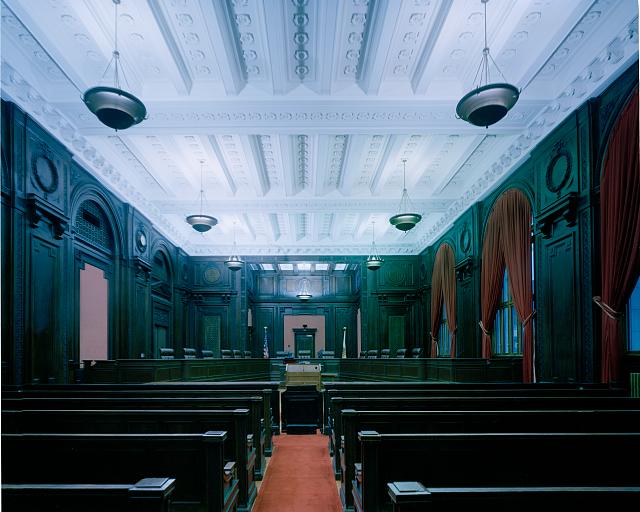
I'm referring to the building above that houses the Eleventh Circuit Court of Appeals renamed in 1981 to honor Elbert Parr Tuttle, an Atlanta  judge known for the large amount of pro bono civil rights work he handled during his legal career. Tuttle was awarded the Presidential Medal of Freedom in 1981 for his Civil Rights work.
The building itself has been the location of several important cases through recent years including the Elian Gonzales case and at least two of the decisions regarding Bush v. Gore were decided within the walls of the Tuttle building.
Also known as the U.S. Post Office and Courthouse from years past, the five-story building is huge. It occupies the block bordered by Forsyth, Fairlie, Poplar, and Walton Streets.
In 1907, Atlanta had grown to such proportions a new federal courthouse and post office was needed. Congress appropriated the money and on July 23, 1907 folks in Atlanta viewed this drawing of their million dollar plus courthouse on the front page of The Atlanta Constitution.


Architecturally, the building follows the Second Renaissance Revival style. Some windows contain carved serpent-and-staff designs associated with Mercury, the Roman messenger god - an early symbol used by the postal service.


A mural decorates the lobby portraying an allegorical Justice flanked by Industry and Agriculture.


The carved oak panels throughout the building are decorated with garlands, scrolled brackets and molding.


....and of course the courtrooms are magnificent with detail. Unfortunately,I don't think someone will be writing about many of the courtrooms of today one hundred years from now. They just don't capture the attention as buildings such as "The Tuttle".


James Knox Taylor, the supervising architect of the U.S. Treasury designed the building with ground being broken in 1906. As I read about the building the most amazing thing I found was a natural rock formation resembling an American Bald Eagle was discovered as the building's foundation was dug. Apparently, folks involved decided since it was a symbol of our country, it was a sign that the proper site had been chosen for a Federal building.

I've scoured the papers during the years of construction - 1906 to 1910 - and can't find a mention of the discovery.

Was this just some natural fluke in the topography of the site?

Was this evidence of Native Americans in the area?

Should it have been preserved?

Seriously....Why can't I find any further mention of the formation?

Sometimes, I can't find the answers I'm searching for, and it's very frustrating.

Pictures courtesy of the Library of Congress.

Monday, June 10, 2013

Stereoscopes: A View Back in Time

I regularly visit our local history museum in Douglasville for obvious reasons since I research and write about local history for our local news outlets and my Douglas County history blog as well.

The volunteers had moved a few things around. There were even some new exhibits including this:


Do you know what it is?

Well, think of a Viewfinder if you grew up in the 1960s or 70s like I did, and you will be on the right track.

Yes!  You viewed pictures through the contraption, but not just any picture.

You viewed a picture card that looked like this:


Wisegeek tells us that a stereoscope is a viewing device which allows users to create a three-dimensional image from a set of two-dimensional photographs or drawings,

Wisegeek further advises the viewer would peer through a rudimentary binocular system, which forced each eye to see only one of the two images. By either crossing or diverging one's eyes, a third image would eventually appear in the middle, and this image would provide the illusion of depth for as long as the viewer maintained proper concentration and focus.

The stereoscope was invented by Sir Charles Wheatstone in 1838. He was a British physicist and was one of the inventors of the telegraph. Of course, in the earliest days the images were drawn by hand, but after photography entered the mix stereoscopes became very popular.

In 1851, Queen Victoria was able to view images through the stereoscope at the Crystal Palace Exhibition, and she was most certainly amused. Around 1860, Oliver Wendell Holmes, Sr.....yes, THE statesman Oliver Wendell Holmes took the British version and streamlined the design making it more affordable.

He actually wrote an article about the stereoscope for The Atlantic in 1859.

Take a look again at the stereograph I posted above. Notice the colored border around the pictures? It isn't just there for looks. The border actually adds to the three-dimensional quality of the image.

The device entered mainstream America, and its popularity took off like a rocket. Soon it seemed that everyone had one.

Stereoscopes were educational. Folks in the South could see how folks in the West lived. You could see parts of the United States as well as the world that most people would never be able to reach. Rail transportation and industry became a popular theme as well as rural and city scenes.

There were even nude stereographs, too.

Over 300 million stereographs were issued between 1854 and 1920. Families could purchase some of the images six for a dollar. Cheaper stereographs went for three cents each or eighty-five cents for 100. They were found in drugstores, mail order catalogs, given away as premiums by tea and cereal companies and college students even went door to door to sell them. Carl Sandburg actually made a few dollars selling stereograms.

It wasn't long before the equipment made its way into America classrooms and photo sets were being marketed for schools. I'm fairly certain the nude ones were left off the school inventory lists.

Today, the stereograms or photographs are more collectable than the viewer. I've even thought of collecting some of my own, but want to decide on a topic or theme first.

In the meantime, I've found several stereograms online that depict life in Savannah, Atlanta, Augusta, and many other Georgia locations. I'll be posting them over the next several days on Facebook.

Are you a Facebook friend with "Georgia on my Mind"?  It's easy to do. Find the "like" box over on the left sidebar and click the "like" button.

See you on Facebook!

Tuesday, May 7, 2013

All Wright - No Wrongs

One of my favorite movies from the late 1950s is A Summer Place mainly because I like Sandra Dee, and I'm in awe of the scenery. The story is set along the coast of Maine, but was filmed on the Pacific Coast at Carmel-by-the-Sea. 

You know, that place where "Dirty Harry" happened to be the mayor for a bit.

While all of the scenery in the movie is fascinating, one location has always held my attention - the fictional residence for one of the couples. It is referenced in the movie that the home was designed by Frank Lloyd Wright, and indeed it was!

The home is known as Walker House (photo courtesy of Brooks Walker). It's located on Scenic Road in Carmel-by-the-Sea. It was designed by Frank Lloyd Wright in 1948.


I saw some friends were discussing the movie and the house on Facebook, so I naturally joined in by sharing this particular link to a post written by Mrs. Walker's grandson, Brooks Walker who is also an architect.

The discussion turned to how some of us would love to go on a tour across the United States to see first-hand some of the homes and buildings designed by Frank Lloyd Wright.

I think it would be a most interesting trip.

However, it would take time and money, but you have to start somewhere, right?

So, I checked to see if Georgia had any structures attributed to Frank Lloyd Wright.

Sadly, no.

However, it is possible for my first notch in my "Frank Lloyd Wright" belt I won't have to go too far.

Right here in Georgia we do have a home attributed to Frank Lloyd Wright's style.

I found an article at Curbed-Atlanta regarding architect Robert M. Green - one of Frank Lloyd Wright's last apprentices and a Georgia native originally from Savannah. It's a great article with a few pictures of the home.

It's called the Arrowhead House (picture courtesy of Curbed-Atlanta).


The Arrowhead House is located in North Druid Hills. Robert M. Green began designing homes and commercial structures in the Atlanta area in 1960. Arrowhead House was built in 1964 for developer Robert Witcher and was named for the unique shape of the primary structure and the arrow-like appearance the plan had on paper.

The house was on the market as recently as February, 2013...I'm not sure if it's been snapped up yet.

A great Flickr set of Arrowhead House can be found here.

I'm off to find my belt, so I can start making those notches!

Wednesday, April 17, 2013

Atlanta's Historic Row Houses

My parents periodically had out of state friends visit us, and of course, we always took them to see the sites. In the late 1960s and 70s the sites included the Varsity, a trip to the airport to watch planes take off and land, and we would have been considered poor hosts if we didn't take folks down to Tenth and Fourteenth Streets to gawk at the Hippies.

Apparently, Atlanta has always had certain must-see sites to show out of town guests. I found this quote from a former governor, John M. Slaton who recalled that in the 90s --that would be the 1890s -- one always took visitors to see the state capitol building, Lithia Springs and Baltimore Block.

Well, I can certainly understand the draw of the state capitol especially if they had the two-headed calf on display back then, and since I research and write about Douglas County I can even understand the draw of Lithia Springs in the 1890s. If you don't, then read this, but what about Baltimore Block?

What the heck was that?

Look at this grand mansion in the picture I've posted below (photo courtesy of the Atlanta History Center).


This is the mansion of Calvin W. Hunnicutt. It's a view of his home via a side street that at the time was known as Hunnicutt Avenue.

Makes sense, right?

Hunnicutt's home sat along Spring Street, and he owned various parcels of land including the land along Hunnicutt Avenue.

At the time the area where Hunicutt lived was very fashionable. It was considered the northern end of the city. In fact, Tenth Street was the dropping off point, since anything past Tenth was farmland, and the roads steadily got worse.

In 1885, along came a company by the name of Atlanta Land and Annuity Company owned by a group of businessmen from Baltimore led by Jacob Rosenthal. They bought the land along Hunicutt Avenue for $22,000 and built 14 townhomes - the first type of apartment homes in Atlanta. Amazingly, 8 of the homes still exist!

In the tradition of Baltimore row houses Rosenthal built homes that appealed to the folks in Atlanta because they were different. Of course, the homes didn't spread out. They were taller than they were wide rising to a height of three floors. Each home had a depth of 70 feet, 1 bath, and a kitchen on the basement floor. The homes boasted the first central heating system in Atlanta. Known as a Baltimore heater it was fitted into the fireplace on the first floor with vents running  to the upper floors.

Of course, Hunnicutt Avenue soon became known as Baltimore Block, and it became one of THE places to live in Atlanta or at least to be seen. During the late 1800s ladies would have social gatherings called "at homes", and to be invited to an "at home" on the Baltimore Block meant you had "arrived." There are also stories of fantastic New Year's Eve parties on the block as well. Another draw was the street itself. It was cobblestone, and added to the unique look of the block.

There were other draws to the property such as the fantastic recessed doorways.


The Baltimore Block homes were also unique in that it was based on the first long-term lease ever consummated in Atlanta. You could purchase one of the homes for $4,000 and take on the responsibility for the taxes, upkeep, etc., but the interesting part of the deal was owners actually leased the land from the Atlanta Land and Annuity Company.

In his book Atlanta and Its Environs Franklin Garrett explains that the "arrangement was quite complicated for those days of straight sales."

Once the purchaser agreed to pay $4,000 for the home he then leased the ground occupied by the building for a term of 99 years at the annual rental of $110 each. This brought the company an annual return of $1,540 on its original investment.

Take another look at the picture I posted above of the Hunnicutt mansion. At the time the picture was taken the row houses had already been built. You can make them out a little in the picture, but here is a better one.


Unfortunately, by 1908 popularity of the Baltimore Block had waned as the fashionable people moved further north, and for a few years the area declined. Four of the units were torn down in 1924.

By the 1930s, the block was run-down and home to vagrants, but a new crowd began to move in.

Folks like Harvey M. Smith, Jr. moved into 17 Baltimore Place. Known for many things including being a close friend of Margaret Mitchell, Mr. Smith published Southern Architectural Review.

Other notable residents during that time were Mr. and Mrs. William Hunter. They moved to Atlanta from Pennsylvania and bought unit 13. Some of the regulars in the neighborhood weren't too happy about that. See, they bought the one unit on the block that had a missing front door. Folks had been using the unit as a walk-through from one side of the block to the other. Mr. Hunter was a landscape architect, and Mrs. Hunter collected antiques.

It was the Hunters who were the long hold-outs during a push by Asa G. Candler to purchase the entire block for a medical complex he wanted to build. Since the Hunter's wouldn't sell the deal fell through. Mr. Candler had to go elsewhere for his building which happened to be Crawford Long Hospital. 

Another notable to the Baltimore Block re-birth was Nancy Barrington Dolinoff de Welles, sometimes referred to as the Countess. She was born in Mobile, Alabama, but if you are familiar with Roswell she was one of the Barringtons of Barrington Hall. The Countess was in Paris at the beginning of World War II. She fled to the United States shipping everything in sections. She took over units 15, 17 and 19 along the block making a very nice home for her and her two daughters.
The picture below is from 1939 along the block during the celebrations across the city of the premier of Gone With the Wind.


By the 1960s another change came to Baltimore Block as the row houses became home to Atlanta's Beat Generation -- a center of counterculture.

At one point a developer came in and wanted to redevelop the block, but again one lone holdout kept the project from happening Property owner Isobel Hunter Quentin put her foot down and wouldn't sell.

You guessed it...she was the daughter of the Hunters who some years before wouldn't see to their unit to Asa G. Candler.

...and it's a good thing. I'm glad she waited for E.R. Howington & Associates to come along. In the late 1980s they bought the block and renovated it into office space. The block is now joined by a glass-roofed atrium to an addition in the back featuring a high rise with more office space and several penthouse apartments.

Today Baltimore Block is part of Atlanta's SoNo District.

SoNo? Yes, the area of town south of North Avenue -- a name the area has held since 2005 when folks decided they wanted a trendy name, but you know what?

I don't think SoNo makes the area trendy. I think it has something to do with the history of the area. The ebb and flow of a block where many different people lived for over a hundred years.

The history of Baltimore Block is the draw, and I'm awfully glad it's still around even if it is a different form from the original.

This PDF file has numerous newspaper and magazine articles concerning Baltimore Block through the years. I lost myself in all forty-something pages last night for several hours.

Monday, February 11, 2013

Looking at the Past Through Present Eyes

Recently I read something that said Douglasville, Georgia is “known for nothing.”

Considering I’ve spent the last few years of my life learning the fascinating history of my little area of the state saying that Douglasville is known for “nothing” riles me up a bit.

Case in point……the summer of ’68.
Dr. Martin Luther King, Jr. had been assassinated in April…..followed by hundreds of riots across the United States.  Dr. King’s contemporaries with the Southern Christian Leadership Conference decided that they would go ahead with Dr. King’s planned Poor People’s Campaign….an effort to bring attention to the nation’s poor. 

This was not a movement focused just on black Americans.  Dr. King intended…..the SCLC’s leadership intended for the movement to focus on all ethnic groups.
Different caravans representing the nation’s poor would converge on Washington D.C.  A camp “city” was set up along the Mall called Resurrection City.

The main caravan headed to Washington D.C. would be the Mule Train out of Marks, Mississippi.  The caravan of wagons crossed Mississippi, Alabama and finally entered Georgia mid-June.
They were met at the Georgia state line by Georgia State Patrol officers who had been ordered by Governor Lester Maddox to serve as the Mule Train’s escort until they crossed the state.

Was there some effort on the Governor’s part to intimidate or harass the folks participating in the Mule Train?
I don’t doubt it.

Was there some effort on the Governor’s part to attempt to keep everyone safe…..those participating with the Mule Train and those citizens who came in contact with the trek across Georgia?
Given the tense times that summer….I don’t doubt it.

The Mule Train had left Marks, Mississippi on May 13th. While folks were still reeling from Dr. King's death and the subsequent riots, Robert F. Kennedy was assassinated on June 5th, a few days before the Mule Train reached Douglasville.

I’ve written about the standoff between Mule Train leaders, the Governor, the State Patrol and the Sheriff of Douglas County here along with a news story and a few pictures that appeared in the Douglas Sentinel.
A week later after things had calmed down and the mules had gone on their clip-cloppy way the editor of the Douglas Sentinel published an editorial. 

I’m reproducing the editorial here in italics with my thoughts interspersed in regular type. 
The incident in Douglasville last week involving the so called “poor people’s” mule train to Washington D.C., and area law enforcement authorities is the latest example of how publicity-hungry the leaders of the flagging civil rights movement are becoming.

Even the normally liberal Atlanta Constitution condemned the incident, saying the marchers “have an ‘incident’ which is earning them publicity, and they are milking it for all its worth.”
After researching the Poor People’s Campaign as I did I believe Dr. King had a valid point in attempting to call attention to the nation’s poor. President Johnson’s “War on Poverty” had all but stalled by 1968 due to the Vietnam War. The history teacher reason for this is that you can’t fight two wars at the same time.

The Sentinel editorial continues….
The whole thing began when the marchers refused to take another, safer route into Atlanta, and demanded to travel Interstate 20, a high-speed expressway. The Georgia State Patrol offered to escort the 13-wagon train via any other route but apparently the so-called “poor people” were determined to violate the law and draw what they hoped would be unfavorable publicity to Douglasville and Georgia. Evidently, they also hoped to revive the now ineffective campaign in Washington D.C.

What would happen if I decided to take a mule driven wagon to Atlanta today….down Interstate 20? 
I’d be stopped and charged with a misdemeanor for sure.
It’s against the law now….it was against the law then.  

While Governor Maddox did have his issues with Civil Rights during the 1960s and 70s, I don’t think he was being nitpicky about detaining the Mule Train. He had a legitimate problem since it WAS against the law. The Mule Train could have continued down Highway 78 to Atlanta, but were adamant about taking the Interstate.
Was it just about needing a shorter route?   Or……did Willie Bolden and other SCLC leaders realize this episode could result in further media attention to shed light on the Poor People’s Campaign?

By the time the Mule Train reached Douglasville the efforts at Resurrection City along the Mall in Washington D.C. were falling apart. It had rained for days….the “city” had become a muddy mess literally and figuratively. Things weren't going well.
The editorial continues….

Willie Bolden, an official of the Southern Christian Leadership Conference was the main ramrod in last Friday’s defiance. But, he skipped out of town so as not to be arrested and became the “official spokesman” for the group. Bolden appeared back in town late Friday afternoon and mumbled a few ridiculous sentences about Douglas County being a “very, very poor county.”
His assistant, Andrew Marrisett attempted to dish out the usual propaganda about a moral right to disobey “unjust laws”, but found himself searching for the right answers when asked by a reporter if someone could strike him (Marisett) if the person believed the law against assault was “morally wrong.”

Marisett also attempted to say it was alright to disobey a law “if you are willing to pay the cost”. However, as it turned out, Marisette and the marchers really weren’t paying anything. They received several hours of rest in Douglasville’s armory, along with a free meal.
However, some 50 Georgia State Patrolmen, Douglasville Policemen, and Douglas County Sheriff’s deputies spent from 16-48 hours without sleep because of the marchers’ foolish antics. Many also went without food for long periods of time, in addition, the state of Georgia had to bear the cost of the patrol protection.

A cost was paid, but not by the so-called “poor people.”
I find it interesting that the author of the editorial…..I’m not sure but I believe it to be Tommy Toles, who was the editor of the Douglas Sentinel at the time……continually put quotation marks around the words poor people throughout his statements. I have no idea if he understood or appreciated the underlying mission behind the Poor People’s Campaign, but it’s obviously he felt the whole episode could have been handled without the taxpayers in Georgia and in Douglas County in particular “paying the cost.”

The editorial continued…..
Sheriff Claude Abercrombie and his entire department, along with Douglasville Police Chief Grady Traylor, his officers, and all state patrolmen are to be commended for the excellent job they did under very trying circumstances. Even the marchers and out-of-town newsmen complimented all three law enforcement branches very highly for their actions.

The thinly veiled effort to draw good publicity to the mule train and to put Douglasville and Georgia in a bad light fell flat on its face. It is apparent that  more and more people are beginning to see the civil rights movement and the so-called “poor people’s” campaign for what it is – an effort to further socialize the United States.
However, we are thankful no violence erupted in Douglasville and no one was injured as the mule train made its way to Atlanta in the early morning hours last Saturday.

This whole matter occurred in Douglasville not because the folks with Mule Train had an ax to grind with Sheriff Abercrombie or anyone else in Douglasville….it happened because it’s the spot where Interstate 20 began back in 1968. 
However, looking back on the entire event it’s easy to see the event for what it was.  An opportunity to get media attention for the Mule Train, and an effort for the Governor to be able to say he tried to enforce the law.

You really can’t blame either side….
Given the climate of the times I can’t help be proud of the people of Douglasville. The situation could have erupted into any of the other numerous situations across the nation where violence ruled during those times.

I'm wondering why there isn't a historical marker at the armory where the Mule Train participants were detained or at least on the school grounds where the marchers camped.

Seriously!  I think this is something that should be remembered.....

And the Poor People’s Campaign?  
This site sums it up well……

“For many of America's poor, there hasn't been much progress in the 40 years since the Poor People's Campaign. In 1968, 25 million people — nearly 13 percent of the population — were living below the poverty level, according to the Census Bureau. In 2006, 36 million people or more than 12 percent of the population, were living below the poverty level.”
The American society has so many issues to work on….and yet we continually allow ourselves to become distracted with the noise and static.

Why are we complacent with numbers like those above?

It’s not about bullying your way down the interstate when there ARE other routes…..it’s about what you do to help someone.
Start with one...

Wednesday, January 23, 2013

Lockerly Hall


Even though we finally got a few days of sun here in the Atlanta area, it’s cold.

It’s freezing cold.
It…is…brutal....damn…cold.

I could blame my age for my aches and pains that seem to like to scream in the worst possible ways during bitter cold weather, but in the end I think it’s just my desire for warmer climates.
I just seem to be in a better mood at seventy degrees or higher.

So, I’m looking forward to April and May…..
I’m so anxious for it I’m already planning a few places I want to go and explore.

Places like Lockerby Hall in the Milledgeville area.
Lockerby Hall serves middle Georgia as a public garden and educational resource with a pond and nature trails.

The site of the home was first used by Richard J. Nichols as his home site in 1839. The home was the centerpiece of Nichol’s plantation, Midway.
The home was known as Rose Hill then due to the roses that covered the banks around the house. When Nichols died in 1849, Daniel R. Tucker, pictured below, served as one of the appraisers for the estate.


Tucker purchased Rose Hill in 1851, but a year later the home was tragically consumed by fire. Tucker built a new home on the same site using the Rose Hill name.


Rose Hill changed hands several times after Tucker died in 1879.

Reginald R. Hatcher bought the property in 1928 and renamed the home Lockerly Hall after an estate in Hampshire, England.
The next owner, Edward J. Grassman established the Arboretum Foundation in 1965.


Today, hundreds of visitors including high school biology students from Baldwin, Putnam and Hancock Counties visit the Arboretum to enjoy the grounds, and later they get to tour a “haunted” house.
There are tales of the heavy wooden pocket doors slamming shut by themselves, ashtrays hurling themselves across rooms and ghostly figures of a man and a young girl have been seen…….mainly during periods of disruption such as renovations.

Some think the apparitions are those of Daniel J. Tucker and one of his daughters….
Yes, this is one destination that is going on my list!


Related Posts Plugin for WordPress, Blogger...